
1Industry Overview
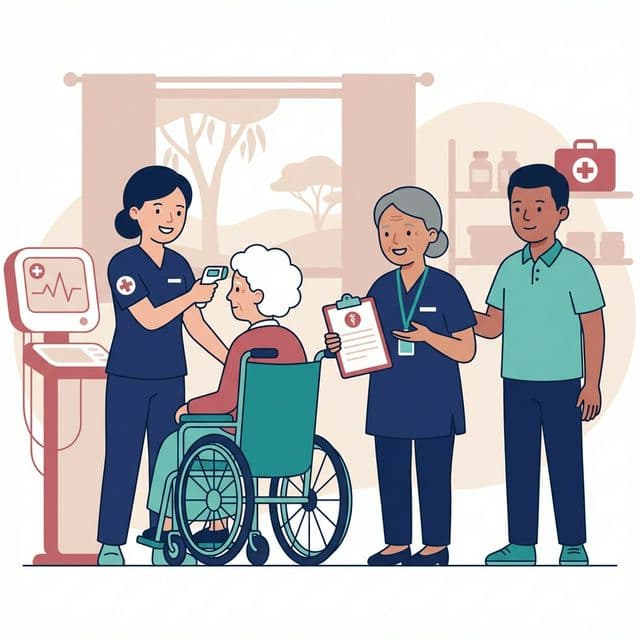
Healthcare and social assistance is Australia's largest employing industry, with over 2 million workers — representing around 14% of total employment. The sector encompasses hospitals, aged care facilities, disability support services, community health centres, and allied health practices. Government spending on healthcare exceeds $220 billion annually, making it a cornerstone of the Australian economy.
2The Aged Care Workforce Challenge
With Australia's population ageing rapidly — over 4.2 million Australians are aged 65+ — the Royal Commission into Aged Care identified critical workforce shortages. The government has committed to improving aged care worker pay and conditions. The sector needs an estimated 100,000+ additional workers by 2030 to meet growing demand. Registered nurses, personal care assistants, and disability support workers are in acute shortage nationwide.
3Career Pathways
Entry-level roles such as aged care assistants and personal carers require a Certificate III in Individual Support (CHC33021). Registered nurses need a Bachelor of Nursing and AHPRA registration. The sector offers clear career progression from assistant roles through to enrolled nursing, registered nursing, and clinical management positions. Pay rates for aged care workers have improved significantly following Fair Work Commission decisions.
4Regional Demand
Regional and remote areas face the most severe healthcare workforce shortages. Incentives including relocation assistance, rural health scholarships, and higher pay scales are available for workers willing to serve in underserved communities. States like Queensland, Western Australia, and Tasmania actively recruit interstate and overseas health professionals to address critical gaps.