
1Industry Overview
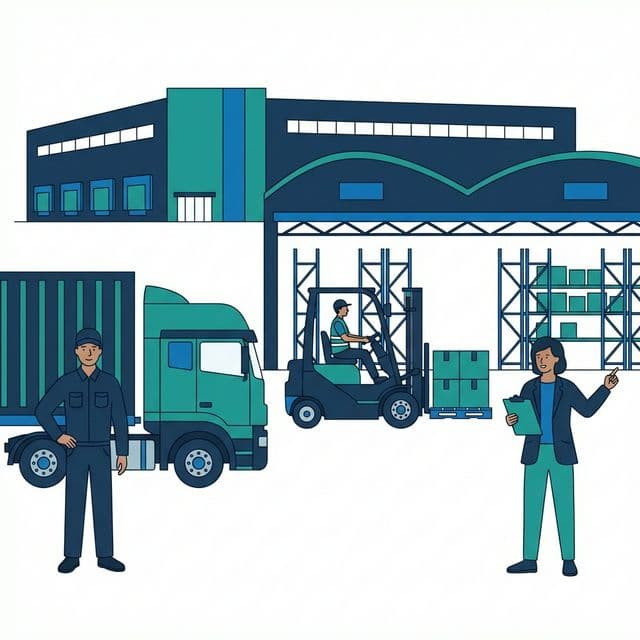
Transport, postal, and warehousing employs over 650,000 Australians and is critical to the country's $400+ billion supply chain. With Australia's vast geography — goods must travel through 7.7 million square kilometres — the logistics sector faces unique challenges. The industry includes road freight, rail, maritime, aviation, warehousing, and last-mile delivery services.
2The Driver Shortage Crisis
Australia faces a shortage of approximately 35,000+ truck drivers, with the average driver age being 48 years — well above the national workforce average. The National Heavy Vehicle Regulator (NHVR) and state transport authorities require specific licence classes (HR, HC, MC) that can take months to obtain. E-commerce growth has further accelerated demand for delivery drivers and warehouse operatives.
3Warehousing & Distribution
The rise of e-commerce has transformed the warehousing sector, with Amazon, Woolworths, and Coles investing billions in automated distribution centres. Forklift operators (requiring a High Risk Work Licence), pick-packers, store persons, and logistics coordinators are in consistent demand. Western Sydney, Melbourne's west, and Brisbane's Trade Coast are major logistics hubs.
4Wages & Opportunities
Heavy vehicle drivers can earn $70,000–$120,000+ annually, with long-haul routes commanding premium rates. Forklift operators earn $28–$38/hour. The sector offers pathways for career progression from warehouse roles to transport coordination, fleet management, and logistics planning. Shift work and weekend availability can significantly boost earnings through penalty rates.