
1Industry Overview
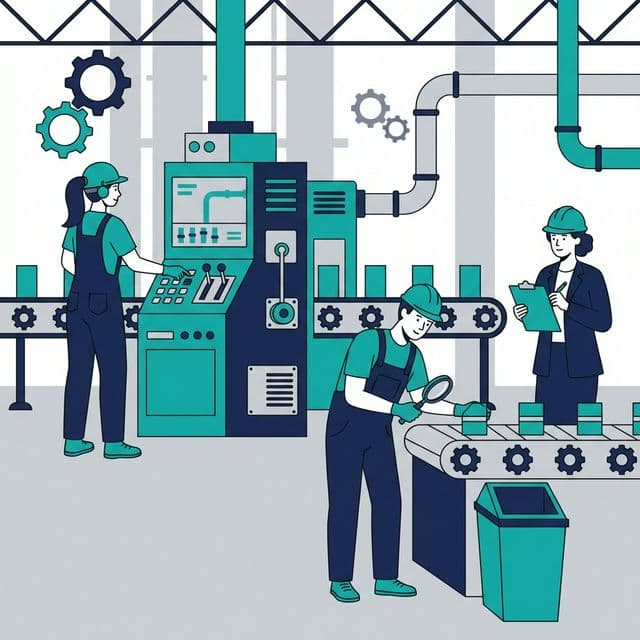
Australia's manufacturing sector contributes over $100 billion to GDP and employs approximately 850,000 workers. While traditional manufacturing has declined, advanced manufacturing — including food processing, pharmaceuticals, defence equipment, and renewable energy components — is growing. The National Reconstruction Fund has allocated $15 billion to support manufacturing innovation and job creation.
2Industry 4.0 & Automation
While automation and robotics are transforming production lines, they are creating new roles rather than simply eliminating jobs. Demand is growing for CNC operators, mechatronics technicians, quality assurance inspectors, maintenance fitters, and production supervisors who can work with automated systems. Workers with both traditional manufacturing skills and digital literacy command premium wages.
3Food & Beverage Manufacturing
Food and beverage is Australia's largest manufacturing subsector, valued at $130+ billion in turnover. It employs over 270,000 workers in processing, packaging, quality control, and food safety roles. Workers typically need Food Safety Supervisor certification and may require industry-specific training. Major employers include Baiada, Ingham's, JBS Australia, and numerous SME food producers.
4Career Progression
Manufacturing offers structured career pathways from entry-level production line roles ($50,000–$60,000) through to skilled trades ($65,000–$90,000) and management positions ($100,000+). Apprenticeships in fitting, turning, welding, and electrical trades remain among the most reliable pathways to well-paying careers with strong job security.